Showing posts with label Unit 2. Global climate - vulnerability and resilience. Show all posts

Friday, October 27, 2017

2.3 Responding to global climate change

Risk and vulnerability - disparities in exposure to climate change

What factors cause some communities to be more vulnerable to extreme weather events than others?

SC MOOC | 3.7 | Urban Risks and Vulnerabilities
Source: https://www.youtube.com/watch?v=0Nh1QrVM9E0&feature=youtu.be

Follow the link for a ranking in readiness and vulnerability to climate change ND-GAIN Country Index

Exposure to climate change risk and vulnerability - Bangladesh

Resultado de imagem para exposure to climate change in bangladesh


Exposure to climate change risk and vulnerability - Greenland

Resultado de imagem para exposure to climate change in greenland


 Global geopolitical action on climate change - Kyoto Protocol and Paris Accord
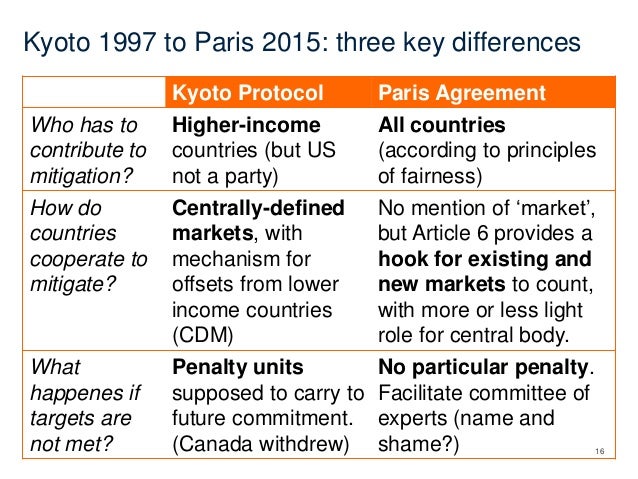

Resultado de imagem para kyoto protocol paris accord


Climate Deal in Paris: Everything You Need to Know


Carbon emissions offsetting and trading
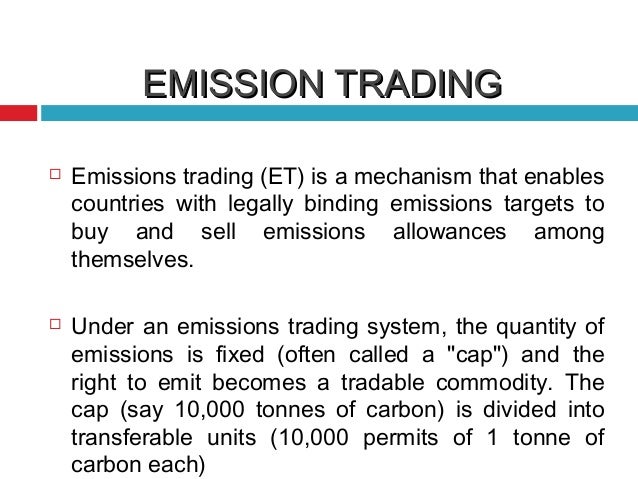
Resultado de imagem para Carbon emissions offsetting and trading

how-carbon-offsets-work

A carbon offset is a reduction in emissions of carbon dioxide or greenhouse gases made in order to compensate for or to offset an emission made elsewhere.

Carbon offsets are measured in metric tons of carbon dioxide-equivalent (CO2e) and may represent six primary categories of greenhouse gases: carbon dioxide (CO2), methane (CH4), nitrous oxide (N2O), perfluorocarbons (PFCs), hydrofluorocarbons (HFCs), and sulfur hexafluoride (SF6). One carbon offset represents the reduction of one metric ton of carbon dioxide or its equivalent in other greenhouse gases.

There are two markets for carbon offsets. In the larger, compliance market, companies, governments, or other entities buy carbon offsets in order to comply with caps on the total amount of carbon dioxide they are allowed to emit. This market exists in order to achieve compliance with obligations of Annex 1 Parties under the Kyoto Protocol, and of liable entities under the EU Emission Trading Scheme. In 2006, about $5.5 billion of carbon offsets were purchased in the compliance market, representing about 1.6 billion metric tons of CO2e reductions.

In the much smaller, voluntary market, individuals, companies, or governments purchase carbon offsets to mitigate their own greenhouse gas emissions from transportation, electricity use, and other sources. For example, an individual might purchase carbon offsets to compensate for the greenhouse gas emissions caused by personal air travel. Many companies offer carbon offsets as an up-sell during the sales process so that customers can mitigate the emissions related with their product or service purchase (such as offsetting emissions related to a vacation flight, car rental, hotel stay, consumer good, etc.). In 2008, about $705 million of carbon offsets were purchased in the voluntary market, representing about 123.4 million metric tons of CO2e reductions. Some fuel suppliers in the UK offer fuel which has been carbon offset such as Fuel dyes.

Offsets are typically achieved through financial support of projects that reduce the emission of greenhouse gases in the short- or long-term. The most common project type is renewable energy, such as wind farms, biomass energy, or hydroelectric dams. Others include energy efficiency projects, the destruction of industrial pollutants or agricultural byproducts, destruction of landfill methane, and forestry projects. Some of the most popular carbon offset projects from a corporate perspective are energy efficiency and wind turbine projects.


Geo-engineering

Geoengineering Methods


Civil society strategies to address global climate change - WWF in the USA
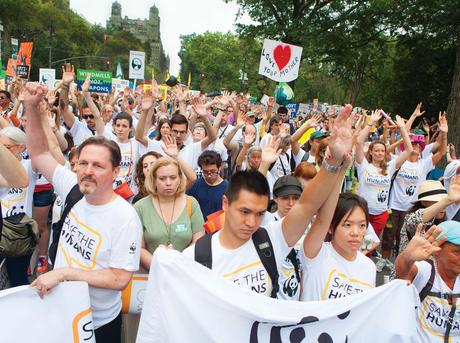
climate march

WHAT WWF IS DOING

To adequately address the climate crisis we must urgently reduce carbon pollution and prepare for the consequences of global warming—which the world is already experiencing—and raise our collective voice for action. Combining global outreach with local expertise, WWF’s focus is on:

PREPARING FOR A CHANGING WORLD

WWF works with local communities, governments and others around the world to help people and nature prepare for the many impacts of a changing climate. To do this we:
Work with communities and governments to understand and prepare for climate change
Integrate environmental considerations into disaster recovery, reconstruction, and risk reduction
Study how people’s responses to climate change affect ecosystems and wildlife
Assess species to determine traits that make them resilient or vulnerable to changes in climate.

DELIVERING ON THE PROMISE OF THE PARIS AGREEMENT

In the US and globally, WWF is leveraging its expertise, reach and partnerships to call for urgent and accelerated action on climate from all sectors of society in order to deliver on the ambitious temperature goals of the historic Paris Agreement. WWF is helping accelerate climate action by:

  • Providing financial support to developing countries as an implementing partner of the Global Environment Facility (GEF)
  • Helping transition developing countries to clean energy sources like wind and solar
  • Working with companies and cities to switch to 100% renewable energy and harnessing their purchasing power to drive bigger change
  • Ensuring that ecosystem-based approaches to adaptation are incorporated into national development plans
  • Collaborating with US Latino leaders and communities to raise awareness of climate risks from Latin America to North America
  • Curbing climate pollution from international aviation
REDUCING EMISSIONS FROM DEFORESTATION

Forests are nature’s greatest technology for combating climate change: they naturally absorb carbon dioxide (CO2), reducing the amount of this heat-trapping gas in our atmosphere. When forests are not managed responsibly, they release large quantities of C02 into the atmosphere. Deforestation and degradation are the largest sources of C02 emissions after the burning of fossil fuels. Scientists estimate up to 13% of global carbon emissions come from deforestation.
WWF saves forests and fights climate change by:
  • Supporting REDD+, which offers financial incentives to developing countries that create and implement strategies to manage and use their forests responsibly.
  • Creating multi-million dollar funds to properly manage forests that are designated as protected.
  • Working to end illegal logging.
  • Ensuring that global climate change agreements reduce forest loss and degradation.
  • Helping countries and regions assess the benefits nature provides under different development and climate change scenarios.

Corporate strategies to address global climate change - CERES (coalition for environmentally responsible economies)

Ceres is a sustainability nonprofit organization working with the most influential investors and companies to build leadership and drive solutions throughout the economy. Through powerful networks and advocacy, Ceres tackles the world’s biggest sustainability challenges, including climate change, water scarcity and pollution, and human rights abuses.

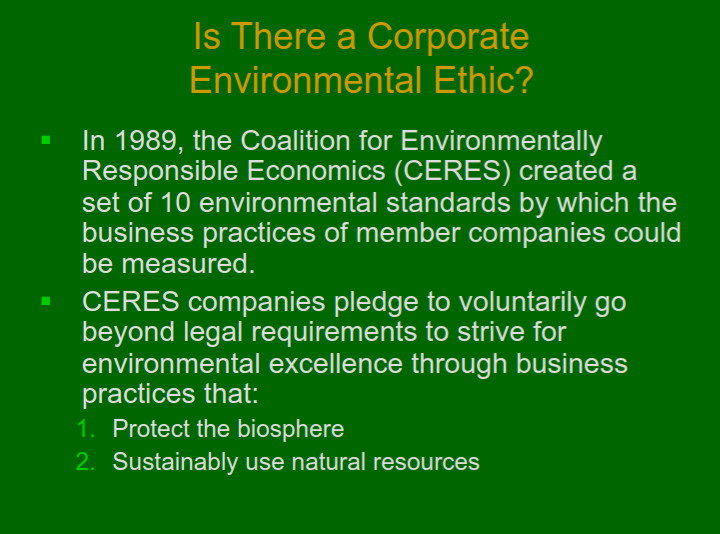
Source: http://slideplayer.com/slide/7339237/


Synthesis and evaluation 

Use the content from this post to plan and answer the following question: 

‘Explain why perspectives may be different about the need for, practicality and urgency of action on global climate change ’. 10 marks

Use markscheme on page 56 from the new syllabus guide (AO3)

Monday, August 28, 2017

2.2 Consequences of global climate change

The implications of climate change: changes to the hydrosphere


Follow the links bellow for more info on the imparct of climate change driven sea level rise and floods:


Case study: the retreat of Swiss glaciers


The implications of climate change: changes in carbon stored in ice, oceans and the biosphere

The carbon cycle


I. Carbon and the Global Carbon Cycle

  • Carbon is a ubiquitous element on Earth. Most of the Earth’s carbon is stored in rocks, but this carbon is essentially inert on the 100’s to 1000’s year timescales of interest to humans.
  • The rest of the carbon is stored as CO2 (carbon dioxide) in the atmosphere (2%), as biomass in land plants and soils (5%), as fossil fuels in a variety of geologic reservoirs (8%) and as a collection of ions in the ocean (85%). These are the “active” reservoirs of carbon of interest in this website.

II. How are the Global Carbon Cycle and Climate Change / Global Warming connected?

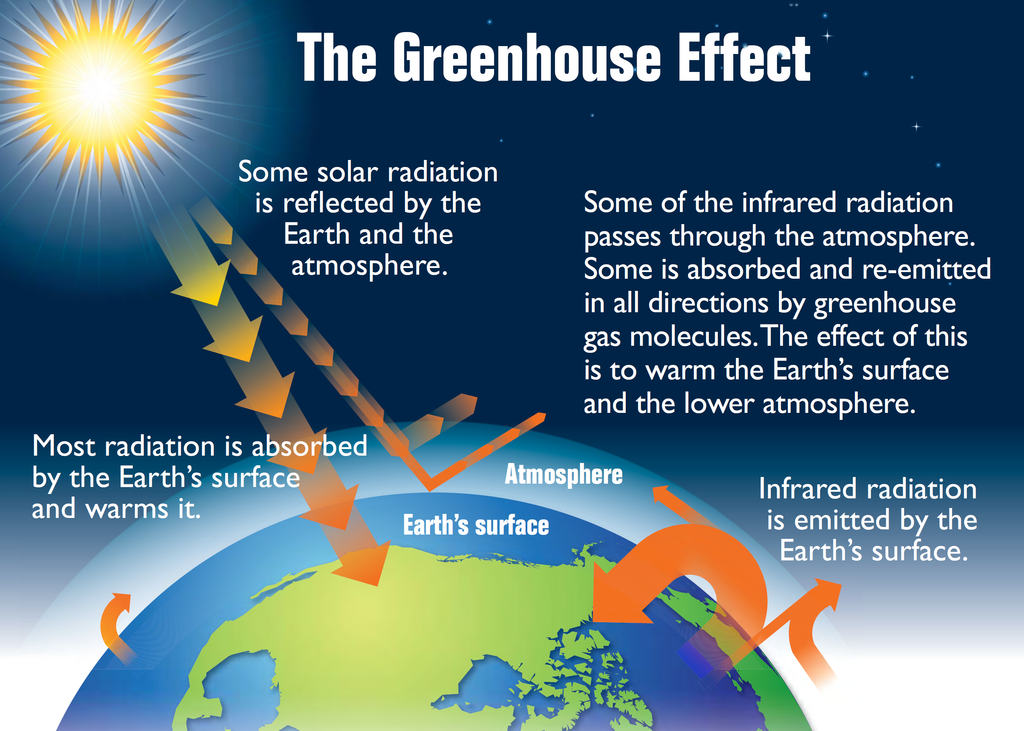
  • The Earth is warmed by the Sun. This warmth is returned from Earth to the atmosphere in the form of heat radiation.
  • Many gases in the atmosphere, including CO2, absorb the Earth’s heat energy and radiate in all directions. The energy radiated downward warms the surface and lower atmosphere.
  • Adding more CO2 to the atmosphere means more heat radiation is captured by the atmosphere and radiated back to Earth.
  • Methane, CH4, is another very important greenhouse gas that is part of the carbon cycle. This website addresses only CO2.

III. Humans add CO2 to the Atmosphere, Nature removes about half of it.

  • In the 1990’s, humans added 8.0×10¹⁵ grams of carbon (1015 grams of carbon  = 1 PgC) to the atmosphere each year, primarily by burning fossil fuels (6.4 PgC/yr) and clearing land in the tropics (1.6 PgC/yr). The ocean took up 28% of this carbon, and the land absorbed 32%. Only 40% remained in the atmosphere to cause climate warming.
  • Natural processes are significantly damping the rate of carbon accumulation in the atmosphere.
  • From 2000-2008, humans added 9.1 PgC to the atmosphere each year, 7.7 PgC/yr from fossil fuels and 1.4 PgC/yr from land use change. There is some evidence that a larger fraction of these recent emissions has remained in the atmosphere (45%, LeQuere et al. 2009).
  • Future climate warming depends on both the CO2 source from human emissions and the CO2 sink from natural sinks in the ocean and the terrestrial biosphere.

IV. Carbon Cycle Applet

  • With applet found on the next tab, you can develop your own scenarios for future human emissions and future carbon sinks in the oceans and on the land. Run the applet to see the impact on atmospheric CO2 and global mean temperature.

V. More information

  • In the following tabs, you can also find basic information on the major components of the global carbon cycle. Under the links tab, you can find links and other resources for more information.


Carbon stored in ice


Carbon stored in oceans

The ocean plays an important part in the carbon cycle. Overall, the ocean is called a carbon ‘sink’ because it takes up more carbon from the atmosphere than it gives up.

Biological pump

Living things in the ocean move carbon from the atmosphere into surface waters then down into the deeper ocean and eventually into rocks. This action of organisms moving carbon in one direction is often called a biological pump.

Carbon gets incorporated into marine organisms as organic matter or structural calcium carbonate. When organisms die, their dead cells, shells and other parts sink into deep water. Decay releases carbon dioxide into this deep water. Look at the carbon cycle interactive to see how much carbon is in the deep ocean compared to other stores. Some material sinks right to the bottom, where it forms layers of carbon-rich sediments. Over millions of years, chemical and physical processes may turn these sediments into rocks. This part of the carbon cycle can lock up carbon for millions of years.


Carbon stored in the biosphere

All life is based on the element carbon. Carbon is the major chemical constituent of most organic matter, from fossil fuels to the complex molecules (DNA and RNA) that control genetic reproduction in organisms. Yet by weight, carbon is not one of the most abundant elements within the Earth's crust. In fact, the lithosphere is only 0.032% carbon by weight. In comparison, oxygen and silicon respectively make up 45.2% and 29.4% of the Earth's surface rocks.

Ecosystems gain most of their carbon dioxide from the atmosphere. A number of autotrophic organisms have specialized mechanisms that allow for absorption of this gas into their cells. With the addition of water and energy from solar radiation, these organisms use photosynthesis to chemically convert the carbon dioxide to carbon-based sugar molecules. These molecules can then be chemically modified by these organisms through the metabolic addition of other elements to produce more complex compounds like proteins, cellulose, and amino acids. Some of the organic matter produced in plants is passed down to heterotrophic animals through consumption.


The implications of climate change: changes in biomes - case study - forest fires in the USA


The implications of climate change: changes to agriculture


The impact of climate change on people and places


Extreme weather events

As the world has warmed, that warming has triggered many other changes to the Earth’s climate. Changes in extreme weather and climate events, such as heat waves and droughts, are the primary way that most people experience climate change. Human-induced climate change has already increased the number and strength of some of these extreme events. Over the last 50 years, much of the U.S. has seen increases in prolonged periods of excessively high temperatures, heavy downpours, and in some regions, severe floods and droughts.


Case study - climate change in the Brazil


Synthesis and evaluation

Use the content from this post and linked articles to plan and answer the following question: 

‘Describe the uneven spatial distribution of effects and uncertainty about their timing, scale and impacts for individuals and societies ’. 10 marks

Use markscheme on page 56 from the new syllabus guide (AO3)


Friday, August 25, 2017

2.1 Causes of global climate change

The atmosphere 

Definition:
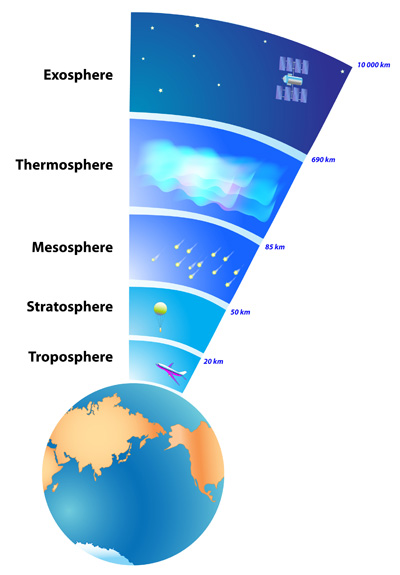
The Earth's atmosphere is an envelope of gas that surrounds the Earth and extends from the Earth's surface out thousands of kilometres, becoming increasingly thinner (less dense) with distance but always held in place by Earth's gravitational pull. The atmosphere contains the air we breathe and it holds clouds of moisture (water vapor) that become the water we drink. It protects us from meteors and harmful solar radiation and warms the Earth's surface by heat retention. In effect, the atmosphere is an envelope that protects all life on Earth.
Source: weather.gov


Troposphere

The troposphere begins at the Earth's surface and extends up to 4-12 miles (6-20 km)
high. This is where we live. As the gases in this layer decrease with height, the air
becomes thinner. Therefore, the temperature in the troposphere also decreases with
height. As you climb higher, the temperature drops from about 62°F (17°C) to -60°F (-
51°C). Almost all weather occurs in this region.
The height of the troposphere varies from the equator to the poles. At the equator it is
around 11-12 miles (18-20 km) high, at 50°N and 50°S, 5½ miles and at the poles just
under four miles high. The transition boundary between the troposphere and the layer
above is called the tropopause. Both the tropopause and the troposphere are known as the
lower atmosphere.

Stratosphere

The Stratosphere extends from the tropopause up to 31 miles above the Earth's surface.
This layer holds 19 percent of the atmosphere's gases but very little water vapor. 
Temperature increases with height as radiation is increasingly absorbed by oxygen
molecules which leads to the formation of Ozone. The temperature rises from an average
-76°F (-60°C) at tropopause to a maximum of about 5°F (-15°C) at the stratopause due to
this absorption of ultraviolet radiation. The increasing temperature also makes it a calm
layer with movements of the gases slow.
The regions of the stratosphere and the mesosphere, along with the stratopause and
mesopause, are called the middle atmosphere by scientists. The transition boundary
which separates the stratosphere from the mesosphere is called the stratopause.

Mesosphere

The mesosphere extends from the stratopause to about 53 miles (85 km) above the earth.
The gases, including the oxygen molecules, continue to become thinner and thinner with
height. As such, the effect of the warming by ultraviolet radiation also becomes less and
less, leading to a decrease in temperature with height. On average, temperature decreases
from about 5°F (-15°C) to as low as -184°F (-120°C) at the mesopause. However, the
gases in the mesosphere are thick enough to slow down meteorites hurtling into the
atmosphere, where they burn up, leaving fiery trails in the night sky.

Thermosphere

The Thermosphere extends from the mesopause to 430 miles (690 km) above the earth.
This layer is known as the upper atmosphere. The gases of the thermosphere are
increasingly thinner than in the mesosphere. As such, only the higher energy ultraviolet
and x-ray radiation from the sun is absorbed. But because of this absorption, the
temperature increases with height and can reach as high as 3,600°F (2000°C) near the top
of this layer.
However, despite the high temperature, this layer of the atmosphere would still feel very
cold to our skin because of the extremely thin air. The total amount of energy from the
very few molecules in this layer is not sufficient enough to heat our skin.


Exosphere

 This region is considered the very outer limits of the earth's atmosphere. Its lower boundary is often called the critical level of escape, where gas atoms are so widely spaced that they rarely collide with one another and have individual orbits. It is estimated to be some 400 plus miles (640 kilometers) above the surface.

Resultado de imagem para atmosphere layers


Source for image: 

As the outermost layer of our atmosphere, the exosphere is where a lot of space weather happens and is our first line of defense against cosmic rays, earthbound meteors, and asteroid impact, among other types of sky events.

As the outermost layer of our atmosphere, the exosphere is where a lot of space weather happens and is our first line of defense against cosmic rays, earthbound meteors, and asteroid impact, among other types of sky events.

There is so little density of particles in the exosphere that it can be difficult to determine where exactly the exosphere actually ends and outer space begins. While many particles that ascend to the exosphere are pulled back to lower levels of the atmosphere by Earth’s gravity, some airatoms and molecules manage to escape into space, yet they are so few and far apart that they rarely ever collide with each other.

Because the air in the exosphere is extremely thin, temperatures range quite drastically. Generally, the exosphere on the daytime side of the Earth can exceed 1,000 degrees, while things are far cooler on the nighttime side – only a few degrees above absolute 0.

It is in the exosphere that satellites orbit; in this environment, there is very little friction as compared to lower levels of the atmosphere, meaning it is the perfect place for equipment such as satellites to orbit with minimal disruption from molecular interference.

In the most technical sense, the upper limit of the exosphere is the last point at which Earth’s gravity still has any influence on particles. Using this definition, the upper exospheric boundary could be as high as 120,000 miles – which is halfway to the Moon.

Earth’s energy budget


Follow the link below for activities about Earth's energy budget:

 The greenhouse effect


How Do Greenhouse Gases Actually Work?

Changes in the global energy balance - global dimming

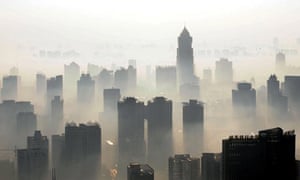
COP15 China and carbon air pollution : haze over Wuhan, Hubei

Global dimming is defined as the decrease in the amounts of solar radiation reaching the surface of the Earth. The by-product of fossil fuels are tiny particles or pollutants which absorb solar energy and reflect back sunlight into the space. This phenomenon was first recognized in the year 1950. Scientists believe that since 1950, the sun’s energy reaching Earth has dropped by 9% in Antarctica, 10% in the USA, 16% in parts of Europe and 30% in Russia – putting the overall average drop to be at an enormous 22%. This causes high risk to our environment.


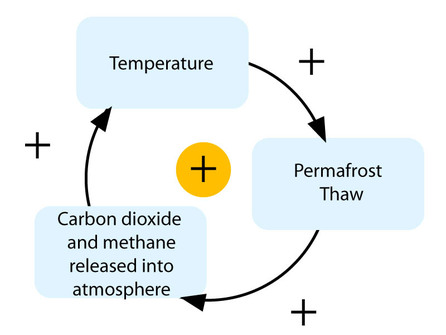
Changes in the global energy balance - positive and negative feedback loops


Feedback loops: How nature gets its rhythms - Anje-Margriet Neutel


Source: http://cars-kill.weebly.com/uploads/4/5/0/5/45052885/179387390.jpg?447


Case study - negative feedback loop: Greenland
Source: Nagle, Garrett, and Briony Cooke. IB Course Companion. 2nd edition. Oxford: Oxford University Press, 2016. Print.

Enhanced greenhouse effect 


Synthesis and evaluation 1: task

Use the content of this post  to plan and answer the following question: ‘Explain the complexity of the dynamic climate system and the spatial interactions of different processes and feedback mechanisms’. 10 marks

Use markscheme on page 56 from the new syllabus guide (AO3)