Showing posts with label Unit 5 HL: Human development and diversity. Show all posts

Saturday, February 17, 2018

HL5.3 Local responses to global interactions

Rejection of globalized production

Food miles

Food miles - the distance food travels from where it is grown to where it is ultimately purchased or consumed by the end user. 

How much of the food you will eat today will be locally produced? And how much will travel hundreds, if not thousands, of miles before it is delivered to your plate? The more food miles that attach to a given food, the less sustainable and the less environmentally desirable that food is. The term food miles has become part of the vernacular among food system professionals when describing the farm to consumer pathways of food.


‘Campaign to protect rural England’ (CPRE)

Resultado de imagem para campaign to protect rural england

Follow the link below for more information about CPRE.


Mecca-Cola

Resultado de imagem para mecca cola


Rise of anti-immigration movements - National Front, France

National Front, French Front National (FN), right-wing French political party founded in 1972 by François Duprat and François Brigneau but most commonly associated with Jean-Marie Le Pen, who was its leader from 1972 to 2011. Since its beginnings, the party has strongly supported French nationalism and controls on immigration, and it often has been accused of fostering xenophobia and anti-Semitism.

Resultado de imagem para national front france
Strength of the future. Join!
Choose your suburb. Vote Front!

Follow the links below for more information about the National Front.


Government and militia controls on personal freedoms to participate in global interactions

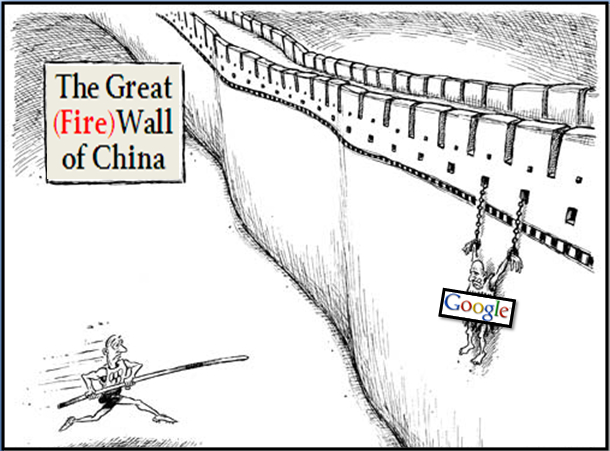
The great firewall of China
Resultado de imagem para the Great Firewall of China

(Reuters) - The “Great Firewall of China” – the world’s most extensive effort to try to control cyberspace – has become more formidable under President Xi Jinping.
Authorities have closed some video and audio streaming websites, limited online access to foreign and “foreign-inspired” television programs, stiffened penalties for “spreading rumor” via social media and restricted access to virtual private networks.


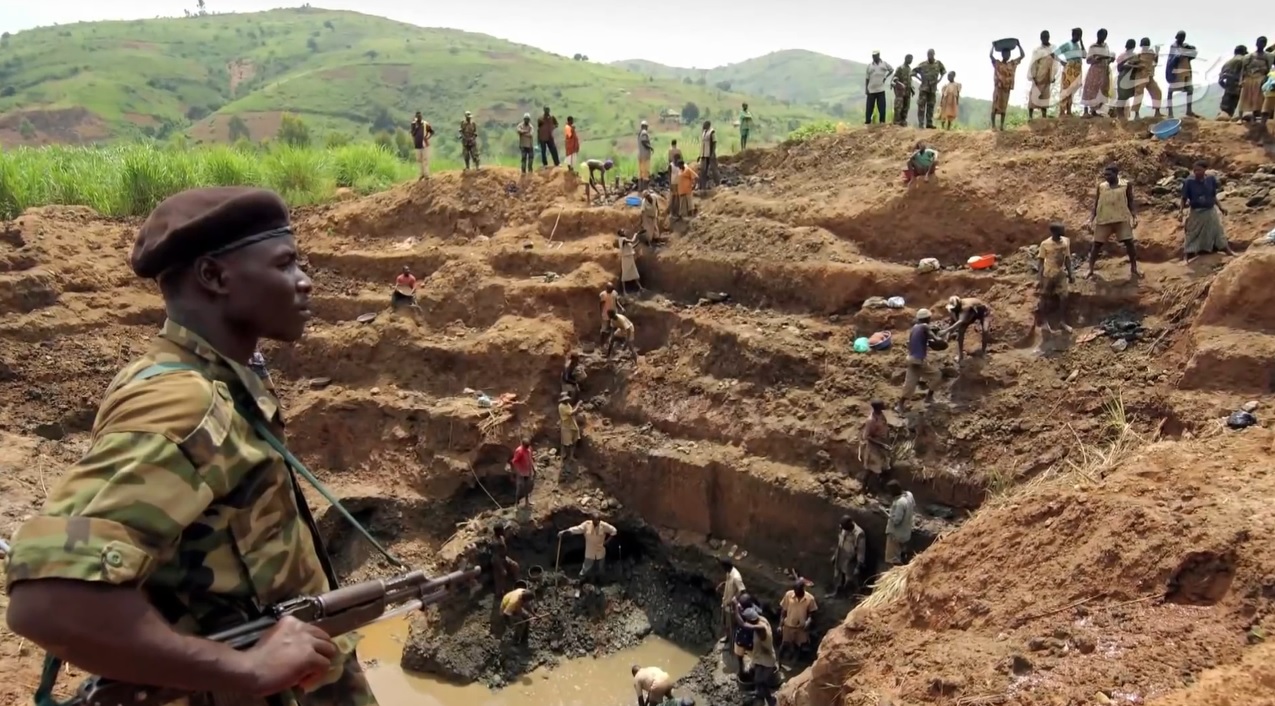
Tantalum mining by militia in Congo - Smartphones and ethics
Resultado de imagem para Tantalum mining by militia in Congo


Follow the link below for more information about ethically sourced tantalum and militia mine control in Congo.
  

National trade restrictions

Protectionism 

What is 'Protectionism'
Protectionism refers to government actions and policies that restrict or restrain international trade, often with the intent of protecting local businesses and jobs from foreign competition.

BREAKING DOWN 'Protectionism'
The merits of protectionism are the subject of fierce debate. Critics argue that over the long term, protectionism often hurts the people it is intended to protect by slowing economic growth and pushing up prices, making free trade a better alternative. Proponents of protectionism argue that the policies provide competitive advantages and create jobs. Protectionist policies can be implemented in four main ways: tariffs, import quotas, product standards and government subsidies.

Tariffs
There are three types of tariffs, also referred to as import duties, that can be implemented for protective measures. All forms of tariff are charged and collected by governments to raise the price of imports to equal or exceed local prices. Scientific tariffs are imposed to raise the prices of products to end users. Peril point tariffs are implemented when less-efficient industries are in jeopardy of closure due to an inability to compete on pricing. Retaliatory tariffs can be used as a response to excessive tariffs being charged by trading partners.

Import Quotas
Trade quotas are non-tariff barriers that are put in place to limit the number of products that can be imported over a set period of time. The purpose of quotas is to limit the supply of specified products, which typically raises prices and allows local businesses to capitalize on unmet demand. Quotas are also put in place to prevent dumping, which occurs when foreign producers export products at prices lower than production costs. An embargo, in which the importation of designated products is forbidden, is the most severe type of quota.

Product Standards
Limitations based on product standards are implemented for a variety of reasons, including concerns over product safety, sub-standard materials or labeling. Whether these concerns are valid or exaggerated, limiting imports benefits local producers. For example, French cheeses made with raw, instead of pasteurized, milk must be aged at least 60 days prior to being imported to the U.S. Because the process for producing young cheeses is often 50 days or fewer, some of the most popular French cheeses are banned, providing local producers the opportunity to compete with pasteurized versions.

Government Subsidies
Governments can help domestic businesses compete by providing subsidies, which lower the cost of production and enable the generation of profits at lower price levels. Examples include U.S. agricultural subsidies and subsidies paid by the Chinese government to help grow the country's automotive industry.

Resource nationalism

Resource nationalism describes a government's effort to gain greater benefit from its natural resources — sometimes to the detriment of private companies. 


Those that have natural endowments such as minerals and other commodities have been continually assessing how they can acquire more revenue from these resources. This could be done by various means – taxes, royalties or full-scale state-ownership – however they need to be vigilant in that significant charges to overseas companies might inhibit foreign direct investment (FDI) which is crucial to many countries that have plentiful natural resources.


Resultado de imagem para resource nationalism map

The role of civil society in promoting international-mindedness and participating in global interactions

Social media use - Avaaz
Resultado de imagem para avaaz logo

Avaaz—meaning "voice" in several European, Middle Eastern and Asian languages—launched in 2007 with a simple democratic mission: organize citizens of all nations to close the gap between the world we have and the world most people everywhere want.

Avaaz empowers millions of people from all walks of life to take action on pressing global, regional and national issues, from corruption and poverty to conflict and climate change. Our model of internet organising allows thousands of individual efforts, however small, to be rapidly combined into a powerful collective force. 

The Avaaz community campaigns in 15 languages, served by a core team on 6 continents and thousands of volunteers. We take action -- signing petitions, funding media campaigns and direct actions, emailing, calling and lobbying governments, and organizing "offline" protests and events -- to ensure that the views and values of the world's people inform the decisions that affect us all. 


Follow the links below for different perspectives about social activism and the role Avaaz plays.


Campaigning for internet freedom - 'Keep us online' India


India had more Internet shutdowns in 2016 than any other country.
State governments were able to shut down the Internet in different parts of the country, affecting millions of people. What’s worse is that these shutdowns happened on some official’s whim with no accountability or oversight.

Internet shutdowns are not only a violation of human rights, they also cost India more than Rs.6000 crores per year. 

State governments justify Internet shutdowns by citing reasons ranging from preventing protests and riots, to stop exam cheating. But there’s evidence that shows that shutdowns do more harm than good. In 2016, the Bangalore police effectively used Twitter and WhatsApp during the Kaveri river riots to prevent panic and highlight police presence in volatile areas.


 Synthesis and evaluation

Use the content from this post to plan an answer for the following question:

‘Explain how the advantages of globalization must be weighed against heightened possibilities of new geopolitical and economic risks’ 18 marks. 

Use markscheme on page 56 from the new syllabus guide (AO3)

Friday, February 16, 2018

HL5.2 Changing identities and cultures

The diffusion of cultural traits

What is cultural diffusion?

Diffusion is a social process through which elements of culture spread from one society or social group to another (cultural diffusion), which means it is, in essence, a process of social change. It is also the process through which innovations are introduced into an organization or social group (diffusion of innovations). Things that are spread through diffusion include ideas, values, concepts, knowledge, practices, behaviors, materials, and symbols.

Sociologists (and anthropologists) believe that cultural diffusion is the primary way through which modern societies developed the cultures that they have today. Further, they note that the process of diffusion is distinct from having elements of a foreign culture forced into a society, as was done through colonization.

Principles of Cultural Diffusion

There are many different theories of cultural diffusion that have been offered by anthropologists and sociologists, but the elements common to them, that can be considered general principles of cultural diffusion, are as follows.

The society or social group that borrows elements from another will alter or adapt those elements to fit within their own culture.
Typically, it is only elements of a foreign culture that fit into the already existing belief system of the host culture that will be borrowed.
Those cultural elements that do not fit within the host culture's existing belief system will be rejected by members of the social group.
Cultural elements will only be accepted within the host culture if they are useful within it.
Social groups that borrow cultural elements are more likely to borrow again in the future.


Cultural traits

Resultado de imagem para cultural traits

The diffusion of cultural traits

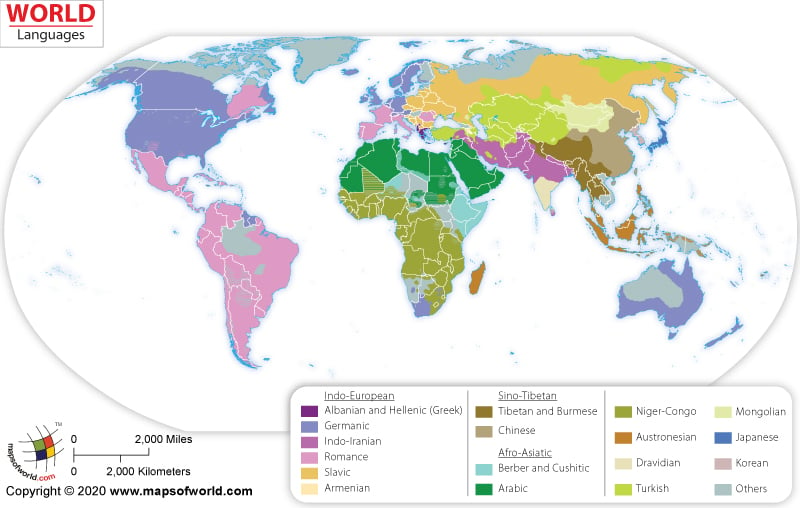
Language

Resultado de imagem para languages of the world map

Customs

Tipping practices around the world

Religion

Resultado de imagem para religion world map

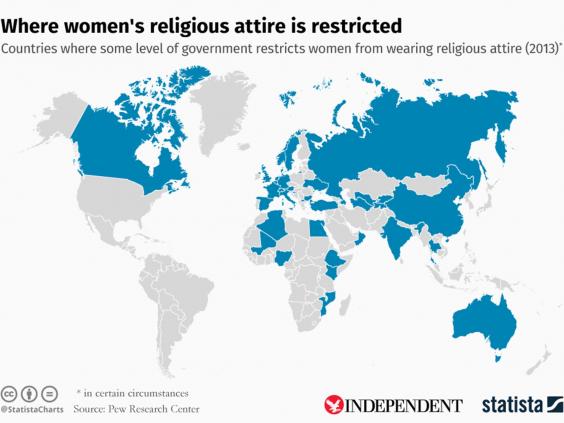
Dress

Resultado de imagem para dress code world map

Resultado de imagem para dress code world map

Music

Resultado de imagem para music origin diagram
Follow the link below for a closer up of the diagram.

Cultural imperialism

Cultural imperialism was around long before the United States became a world power. In its broadest strokes, imperialism describes the ways that one nation asserts its power over another. Just as imperial Britain economically ruled the American colonists, so did Britain strongly influence the culture of the colonies. The culture was still a mix of nationalities—many Dutch and Germans settled as well—but the ruling majority of ex-Britons led British culture to generally take over.

Today, cultural imperialism tends to describe the United States’ role as a cultural superpower throughout the world. American movie studios are generally much more successful than their foreign counterparts not only because of their business models but also because the concept of Hollywood has become one of the modern worldwide movie business’s defining traits. Multinational, nongovernmental corporations can now drive global culture. This is neither entirely good nor entirely bad. On one hand, foreign cultural institutions can adopt successful American business models, and corporations are largely willing to do whatever makes them the most money in a particular market—whether that means giving local people a shot at making movies, or making multicultural films such as 2008’s Slumdog Millionaire. However, cultural imperialism has potential negative effects as well. From a spread of Western ideals of beauty to the possible decline of local cultures around the world, cultural imperialism can have a quick and devastating effect.


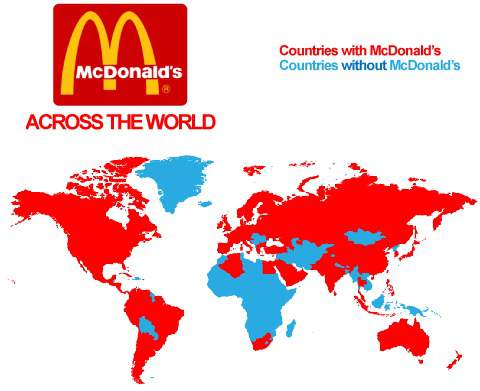
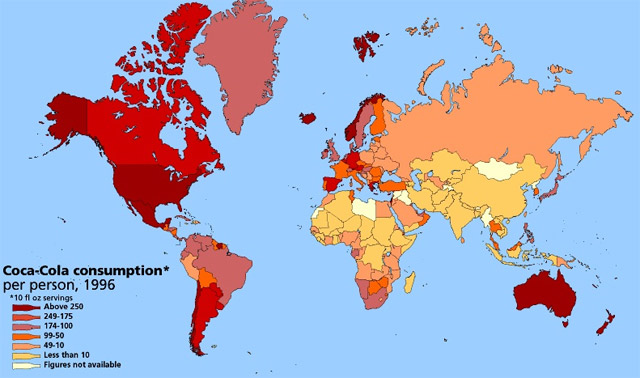
Resultado de imagem para cultural imperialism map

Resultado de imagem para cultural imperialism map

Glocalization of branded commodities 

Resultado de imagem para glocalization

Glocalization is a combination of the words "globalization" and "localization", used to describe a product or service that is developed and distributed globally, but is also adjusted to accommodate the user or consumer in a local market.Unknown Object


Examples of glocalization


Cultural hybridity

USA ancestry map 2000

Read more about cultural hybridity by following the link below.

Cultural landscape changes in the built environment

Homogenisation of urban landscapes refers to the increasing similarities between towns and cities regardless of their geographical location. Some common features include the following:

  • Tall buildings – especially in the central business district, tall buildings are very common in most cities. This is primarily due to the high bid rent that occurs in the centre of most cities, because these areas are the easiest to access for the majority of the population. 
  • Industrial estates – as the world economy becomes increasingly globalized, there has been a shift for heavy industry from the Core (HICs in Europe and North America) to Semi-Periphery countries, especially in Asia. The requirements of these areas are largely the same – large areas of flat land, easy access to transport (especially rail and sea), a supply of energy, and so on. As a result, industrial areas have increasingly followed the same model of development regardless of geographical location. Local factors that would force the industry to modify its requirements simply cause the industry to locate elsewhere in a place that can satisfy its needs.
  • Science parks – similarly, the requirements of footloose industry (light industry such as research and development) and tertiary sector businesses mean that many HICs have similar environments, which attract these industries. They are usually on the edge of town to take advantage of the low bid rent, and the cheaper costs of building on greenfield land. There are, of course, individual architectural techniques applied, but the generic look – low rise, large green spaces, large car parks, and proximity to motorway junctions – is standard across the Western world.
  • Retail parks – along with industry and services, retail also has a series of similar requirements. The availability of car parking and the large area of land required for larger shops with greater variance in products guides the overall construction, though retail parks are often themed to give them a local flavor. 
  • New town developments – in many urban areas, planners have used up all the available land and instead have begun new town projects situated just outside the urban area. As these are often constructed quickly – over period of less than twenty years – they frequently use the same building methods and architectural styles that are considered best practice. The increasing globalization of communication allows these styles to be shared quickly internationally, resulting in new towns resembling each other regardless of the individual town’s location.
  • Pedestrianized centres – due to the global increase in wealth and the corresponding desire for private transport, many central areas of cities face the same problem of congestion. The solutions can vary, but frequently cities look to other cities around the world for the solution – so pedestrianized precincts, which have been shown to work in North America and Europe – are copied elsewhere.
  • World Cities – these are nodal centres in a global urban network. As a result they have frequent business travel and tourism, and this encourages the cities to try to ‘out do’ one another by building better versions of each other’s successful projects. 

Global diaspora population and its cultures

Resultado de imagem para global diaspora

Diaspora means ‘the dispersion or spread of any people from their original homeland’. 

  • Diaspora came into widespread usage in the Jewish case when scholars in Alexandria translated the first five books of the Hebrew Bible into Greek around 250 BCE. In this translation, known as the Septuagint, the verb diaspeirein and the noun diasporá described a condition of spiritual anguish accompanying the dispersal of the Jews by an angry God. In the words of Deuteronomy 28:25 (NSRV): “The Lord will cause you to be defeated before your enemies. You will come at them from one direction but flee from them in seven, and you will become a thing of horror to all the kingdoms on earth.”
  • For 2,000 years the term Diaspora — with an upper-case D — was associated almost exclusively with Jewish history. The New Shorter Oxford English Dictionary cites Deuteronomy 28:25 in support of its primary definition: “the dispersion of Jews among the Gentile nations; all those Jews who lived outside the biblical land of Israel.”
  • In the twentieth century, many other globally scattered groups began to use diaspora to describe themselves. Among the first to do so were the Armenians and people of African descent. For the latter, Exodus provided a central theme.
  • Since World War II, the idea of diaspora has proliferated to an extraordinary extent. One reason for this development was decolonization, which forged transnational bonds of solidarity among globally scattered populations, notably those of African origin. Decolonization also led to the expulsion and forcible remigration of many groups, especially those of Asian origin (e.g., ethnic Chinese in Indonesia and Vietnam or South Asians in East Africa).
  • Another reason for the increased popularity of diaspora is the international recognition of refugees. There have been refugees in history as long as there have been wars, plagues, and famines. But formal recognition by the UN brought new attention to the problem. Today the various UN agencies classify 15 million people as refugees, in addition to another 15 million Internally Displaced Persons (IDPs) and 3.5 million stateless persons. In 2000 the UN designated the 20th of June as World Refugee Day.
  • The massive scale of contemporary international migration leads some commentators to proclaim an Age of Diaspora. If the 217 million people currently classified as international migrants moved to an unoccupied country, they would make up the fifth largest country on earth. In 2000 the UN designated the 18th of December as International Migrants Day. Yet, as a proportion of the world’s population, the rate of international migration is lower than it was a century ago.
  • Almost every diaspora involves the idea of return. Sometimes return is literal and physical, as in the case of the Zionist movement or the relocation of African-origin people from the Americas. More often, the desire to return is heightened by the knowledge of its impossibility; in these cases it can assume potent political, cultural, and spiritual dimensions. The great majority of African-descended people in the Americas, for example, could never hope to move literally to Africa — but this very fact helps explain the efflorescence of Back-to-Africa movements.
  • The Gathering is one example of the recent movement by governments around the world to reach out to “their” diasporas, establishing new networks of commerce and culture and tapping into enormous financial and political resources. The Irish government, led by Enda Kenny, launched The Gathering, which per its official website “invites anyone who has a link to Ireland or just a love of the country, to come to Ireland for a series of events throughout 2013.”

Synthesis and evaluation 

Use the content from this post to plan an answer to the following question:

‘Examine differing evidence and perspectives on how diversity is changing at local, national and global scales’ 18 marks.  

Use mark scheme on page 56 from the new syllabus guide (AO3)